
The Data Science Interview in 2026: What’s Changed and How to Prepare — Complete Technical Guide
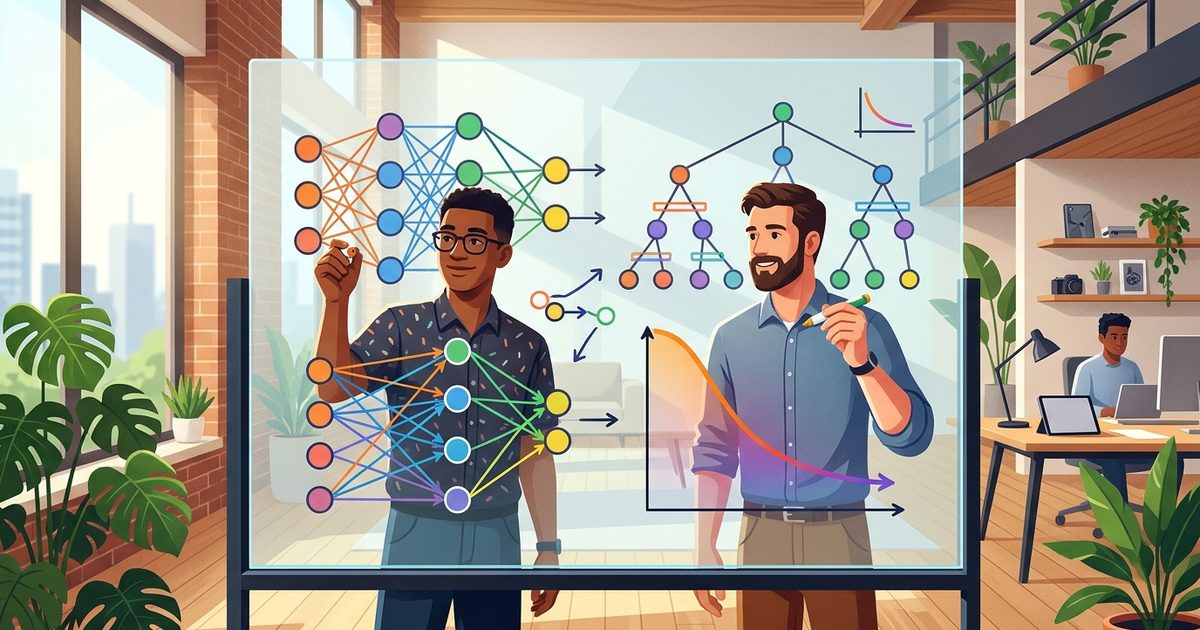
Master the 2026 Data Science interview: Round-by-round prep covering AI-assisted coding, ML system design, GenAI evals, A/B testing & FAANG hiring rubrics.
⚡ Key Takeaways: What Changed in 2026 Data Science Hiring
- End of LeetCode Memorization: Tech hiring committees now permit or mandate AI copilots during live coding rounds, evaluating code review proficiency, modular design, and vectorized operations (Polars, PyTorch, DuckDB) over rote algorithmic tricks.
- Mandatory GenAI & RAG Evaluation Round: Candidates are universally tested on modern GenAI architectures: evaluating RAG systems (Context Relevance, Faithfulness, Answer Relevance via RAGAS), hallucination mitigation, and agentic tool-calling.
- Production ML System Design: Emphasis has shifted from offline notebook models to real-time inference latency (<40ms), feature stores (Feast), model drift detection, and Triton/ONNX serving pipelines.
- Statistical Rigor & Causal Inference: Interviewers prioritize candidates who understand power analysis, CUPED variance reduction, and business KPI trade-offs beyond simple p-values.
1. Executive Overview: The Great Shift in Tech Hiring (2024 vs. 2026)
Between 2022 and 2024, data science interviews were dominated by a rigid formula: one SQL round, one medium-difficulty LeetCode algorithmic puzzle, an open-ended machine learning design scenario, and a basic product metrics discussion. In 2026, this paradigm has undergone a fundamental transformation.
- Executive Overview: The Great Shift in Tech Hiring (2024 vs. 2026)
- Round 1: AI-Assisted Live Coding & High-Performance Data Ops
- Production Code Example: High-Throughput Polars Feature Engineering
- Round 2: Machine Learning System Design (MLOps & Real-Time Serving)
- Round 3: GenAI, RAG Architectures & LLM Evaluation Rubrics
- Production Evaluation Snippet: RAG Faithfulness Scoring
- Round 4: Statistical Rigor, A/B Testing & Business Impact
- Actionable 8-Week Preparation Roadmap
- Frequently Asked Questions (FAQ)
- What is the biggest difference in Data Science interviews in 2026 compared to earlier years?
- Are coding rounds in 2026 still conducted without AI tools?
- How should data scientists prepare for the GenAI and RAG evaluation round?
- What Machine Learning system design topics are most frequently asked?
- How can Asian Technology Hub help me crack senior Data Science interviews?
- Recommended Learning Tracks & Related Tech Guides
With generative AI coding assistants ubiquitous across engineering organizations, the ability to write basic binary search or inversion routines from scratch has zero predictive validity for hiring managers. Today, tier-1 tech companies and high-growth enterprises assess candidates across four modern evaluation pillars:
2. Round 1: AI-Assisted Live Coding & High-Performance Data Ops
In modern coding screens, interviewers explicitly ask: “How would you prompt an assistant to scaffold this pipeline, and how do you verify its correctness, memory footprint, and edge cases?”
Key technical expectations in this round include:
- Vectorized Data Processing: Moving beyond single-threaded Pandas toward
PolarsorDuckDBfor out-of-core execution and multi-threaded lazy evaluations. - Algorithmic Complexity & Profiling: Identifying cache locality, memory overhead, and computational asymptotic bounds ($O(N log N)$ vs $O(N^2)$).
- Defensive Code & Unit Testing: Writing comprehensive parameter validations, typed hints (PEP 484), and PyTest fixtures.
Production Code Example: High-Throughput Polars Feature Engineering
Here is an illustrative production pattern demonstrating zero-copy lazy evaluation and rolling aggregation expected in senior interview rounds:
import polars as pl
from datetime import datetime, timedelta

def compute_customer_velocity_features(df_lazy: pl.LazyFrame) -> pl.DataFrame:
    """
    Computes rolling event velocity and transaction drift using Polars Lazy API.
    Guarantees out-of-core memory safety and SIMD hardware parallelization.
    """
    query = (
        df_lazy
        .filter(pl.col("timestamp") >= datetime.now() - timedelta(days=90))
        .sort(["customer_id", "timestamp"])
        .with_columns([
            # Rolling 7-day transaction velocity
            pl.col("amount")
            .rolling_mean(window_size="7d", by="timestamp", closed="left")
            .over("customer_id")
            .alias("rolling_avg_amt_7d"),

            # Dynamic z-score transaction anomaly indicator
            (
                (pl.col("amount") - pl.col("amount").mean().over("customer_id"))
                / (pl.col("amount").std().over("customer_id") + 1e-6)
            ).alias("amount_zscore_personal")
        ])
        .filter(pl.col("amount_zscore_personal") > 2.5)
    )

    # Execute optimized execution graph
    return query.collect()
3. Round 2: Machine Learning System Design (MLOps & Real-Time Serving)
The ML System Design round in 2026 tests real-world architectural maturity. Instead of merely choosing between Random Forests and XGBoost, candidates must architect end-to-end distributed infrastructure:
- Feature Store Synchronization: Bridging offline training data stores (Snowflake, BigQuery) with low-latency online key-value stores (Redis, Feast) to prevent train-serve skew.
- Inference Serving Infrastructure: Deploying via Triton Inference Server or ONNX Runtime to meet stringent SLA latency budgets (< 35 ms p99).
- Model Observability & Drift Detection: Monitoring Population Stability Index (PSI), Kolmogorov-Smirnov distribution shifts, and automated retraining triggers.
4. Round 3: GenAI, RAG Architectures & LLM Evaluation Rubrics
The newest universal round in tech hiring is GenAI System Evaluation. Interviewers assess whether you treat LLMs as deterministic black boxes or as measurable engineering systems:
- The RAG Triad Evaluation:
- Context Relevance: Does the vector retriever return only necessary information?
- Groundedness (Faithfulness): Is every sentence in the response mathematically provable from the retrieved context?
- Answer Relevance: Does the output satisfy the user query without conversational hallucination?
- Automated Evaluation Frameworks: Structuring CI/CD test suites with
Ragas,TruLens, or customized LLM-as-a-judge rubrics. - Cost & Latency Trade-offs: Specifying caching tiers (semantic caching via GPTCache), prompt compression, and SLM fine-tuning (e.g. Llama 3 8B) vs frontier proprietary models.
Production Evaluation Snippet: RAG Faithfulness Scoring
# Automated Groundedness & Faithfulness Verification Harness
from typing import List, Dict

def evaluate_rag_faithfulness(
    query: str,
    retrieved_contexts: List[str],
    generated_answer: str,
    judge_client
) -> Dict[str, float]:
    """
    Computes fractional groundedness score using claim-decomposition evaluation.
    """
    eval_prompt = f"""
    [TASK]: Analyze the Generated Answer against the Retrieved Contexts.
    Decompose the answer into standalone atomic claims.
    For each claim, determine if it is directly supported by the contexts (1) or unverified/hallucinated (0).
    Contexts: {retrieved_contexts}
    Answer: {generated_answer}
    Return JSON: {{"claims": [{"claim": str, "supported": int}], "faithfulness_score": float}}
    """
    response = judge_client.generate(eval_prompt)
    return response.json()
5. Round 4: Statistical Rigor, A/B Testing & Business Impact
The final round measures product acumen and statistical rigor. High-performing data scientists must demonstrate:
- Variance Reduction Techniques: Implementing CUPED (Controlled-Experiment Using Pre-Experiment Data) to shrink required sample size by 30-50%.
- Network Effects & Interference: Designing cluster-randomized or switchback experiments for marketplace and social dynamics.
- Guardrail vs Primary Metric Trade-offs: Resolving conflicts when conversion rate spikes but user retention or server latency degrades.
6. Actionable 8-Week Preparation Roadmap
- Weeks 1–2 (Data Manipulation & Vectorized Code): Master Polars lazy evaluation, PyTorch tensor mechanics, and advanced SQL window functions.
- Weeks 3–4 (Statistical Foundations & A/B Experimentation): Review hypothesis testing, sample size formulas, multi-armed bandits, and CUPED variance reduction.
- Weeks 5–6 (Production ML System Design): Architect feature stores, caching layers, batch vs streaming pipelines, and automated model governance.
- Weeks 7–8 (GenAI Evals & FAANG Mock Interviews): Build end-to-end RAG evaluation harnesses, practice mock system design interviews, and refine behavioral leadership stories.
At Asian Technology Hub, candidates undergo structured 1-on-1 mentorship with senior staff engineers from tier-1 MNCs, complete with real-time architectural whiteboarding and resume portfolio reviews.
7. Frequently Asked Questions (FAQ)
What is the biggest difference in Data Science interviews in 2026 compared to earlier years?
The biggest shift is the move from manual algorithmic trivia (LeetCode) to AI-assisted coding, production ML architecture, and GenAI system evaluations. In 2026, companies evaluate how effectively you collaborate with AI assistants, profile code performance, design feature stores, and implement measurable guardrails against LLM hallucinations.
Want to master Generative AI, Agentic Workflows & Data Science with Real-World Projects?
Learn LLM fine-tuning, RAG architectures, LangChain, and advanced data engineering with hands-on labs. Join mentor-led live classes with guaranteed placement assistance in Madhapur, Hyderabad.
Are coding rounds in 2026 still conducted without AI tools?
Most forward-thinking tech employers now allow or encourage AI assistants in live technical rounds. However, the evaluation bar has shifted: interviewers expect candidates to swiftly catch hallucinated bugs, write comprehensive unit tests, optimize computational memory footprint, and refactor code into clean, modular enterprise architectures.
How should data scientists prepare for the GenAI and RAG evaluation round?
Focus on the RAG Triad: Context Relevance, Groundedness (Faithfulness), and Answer Relevance. Study evaluation frameworks such as Ragas and TruLens, practice writing LLM-as-a-judge prompts, and understand cost-latency trade-offs between semantic caching, small language models (SLMs), and frontier LLM APIs.
What Machine Learning system design topics are most frequently asked?
Top design scenarios include real-time recommendation engines, fraud detection pipelines, personalized search ranking, and dynamic pricing engines. Key architectural components tested include offline/online feature stores (Feast), low-latency serving (Triton/ONNX), distributed training, and automated drift detection.
How can Asian Technology Hub help me crack senior Data Science interviews?
Asian Technology Hub provides comprehensive mentor-led training, 1-on-1 technical mock interviews with FAANG-level principal engineers, live architectural whiteboarding sessions, and verified placement support with top tech firms in Hyderabad and globally.
8. Recommended Learning Tracks & Related Tech Guides
To master advanced data science patterns and prepare for competitive technical hiring loops, explore our specialized engineering tracks:
- Python Full Stack & Backend Architecture Guide — Master high-performance Python, FastAPI, PostgreSQL, and scalable microservices.
- Generative AI & LLM Systems Roadmap — Implement LangChain, RAG architecture, agentic loops, and vector embeddings.
- AWS Cloud Infrastructure & Kubernetes MLOps — Deploy production CI/CD pipelines, GPU clusters, and model serving infrastructure.
- Book Free 1-on-1 Career Mentorship Session — Fast-track your engineering transition with Asian Technology Hub faculty.
{
“@context”: “https://schema.org”,
“@type”: “FAQPage”,
“mainEntity”: [
{
“@type”: “Question”,
“name”: “What is the biggest difference in Data Science interviews in 2026 compared to earlier years?”,
“acceptedAnswer”: {
“@type”: “Answer”,
“text”: “The biggest shift is the move from manual algorithmic trivia (LeetCode) to AI-assisted coding, production ML architecture, and GenAI system evaluations. In 2026, companies evaluate how effectively you collaborate with AI assistants, profile code performance, design feature stores, and implement measurable guardrails against LLM hallucinations.”
}
},
{
“@type”: “Question”,
“name”: “Are coding rounds in 2026 still conducted without AI tools?”,
“acceptedAnswer”: {
“@type”: “Answer”,
“text”: “Most forward-thinking tech employers now allow or encourage AI assistants in live technical rounds. However, the evaluation bar has shifted: interviewers expect candidates to swiftly catch hallucinated bugs, write comprehensive unit tests, optimize computational memory footprint, and refactor code into clean, modular enterprise architectures.”
}
},
{
“@type”: “Question”,
“name”: “How should data scientists prepare for the GenAI and RAG evaluation round?”,
“acceptedAnswer”: {
“@type”: “Answer”,
“text”: “Focus on the RAG Triad: Context Relevance, Groundedness (Faithfulness), and Answer Relevance. Study evaluation frameworks such as Ragas and TruLens, practice writing LLM-as-a-judge prompts, and understand cost-latency trade-offs between semantic caching, small language models (SLMs), and frontier LLM APIs.”
}
},
{
“@type”: “Question”,
“name”: “What Machine Learning system design topics are most frequently asked?”,
“acceptedAnswer”: {
“@type”: “Answer”,
“text”: “Top design scenarios include real-time recommendation engines, fraud detection pipelines, personalized search ranking, and dynamic pricing engines. Key architectural components tested include offline/online feature stores (Feast), low-latency serving (Triton/ONNX), distributed training, and automated drift detection.”
}
},
{
“@type”: “Question”,
“name”: “How can Asian Technology Hub help me crack senior Data Science interviews?”,
“acceptedAnswer”: {
“@type”: “Answer”,
“text”: “Asian Technology Hub provides comprehensive mentor-led training, 1-on-1 technical mock interviews with FAANG-level principal engineers, live architectural whiteboarding sessions, and verified placement support with top tech firms in Hyderabad and globally.”
}
}
]
}
Ready to Transition into a High-Paying Software Career?
Whether you are a student, fresh graduate, or working professional switching into IT, Asian Technology Hub provides industry-standard curriculum, real enterprise capstone projects, and direct placement support.