
Learn Agentic Coding with Codex & AI Coding Agents — Complete Technical Guide

Learn agentic coding with Codex and autonomous AI coding agents in 2026. Master automated test generation, code synthesis, and CI/CD agents.
⚡ Key Takeaways for Developers
- Core Focus: Learn Agentic Coding with Codex & AI Coding Agents represents a critical concept in modern Artificial Intelligence & Data Science.
- Industry Relevance: Mastering these patterns enables engineering teams to build scalable, resilient, and high-performance software.
- Career Impact: Strong command of Generative AI & Agentic Workflows is currently among the top requirements in technical hiring interviews.
1. Executive Overview & Technical Background
Learn Agentic Coding with Codex & AI Coding Agents has emerged as a vital topic in today’s engineering landscape. As distributed architectures, cloud-native deployments, and AI-accelerated workflows reshape software delivery, understanding the underlying principles is essential for junior and senior engineers alike.
- Executive Overview & Technical Background
- Deep Dive: Architecture & Implementation Patterns
- Example Implementation & Code Structure
- Career Roadmap: Why This Skill Matters in 2026
- Frequently Asked Questions (FAQ)
- What is the primary advantage of understanding Learn Agentic Coding with Codex & AI Coding Agents?
- How can beginners start practicing Generative AI & Agentic Workflows?
- Is Generative AI & Agentic Workflows in high demand for tech job placements?
- Recommended Learning Tracks & Related Tech Guides
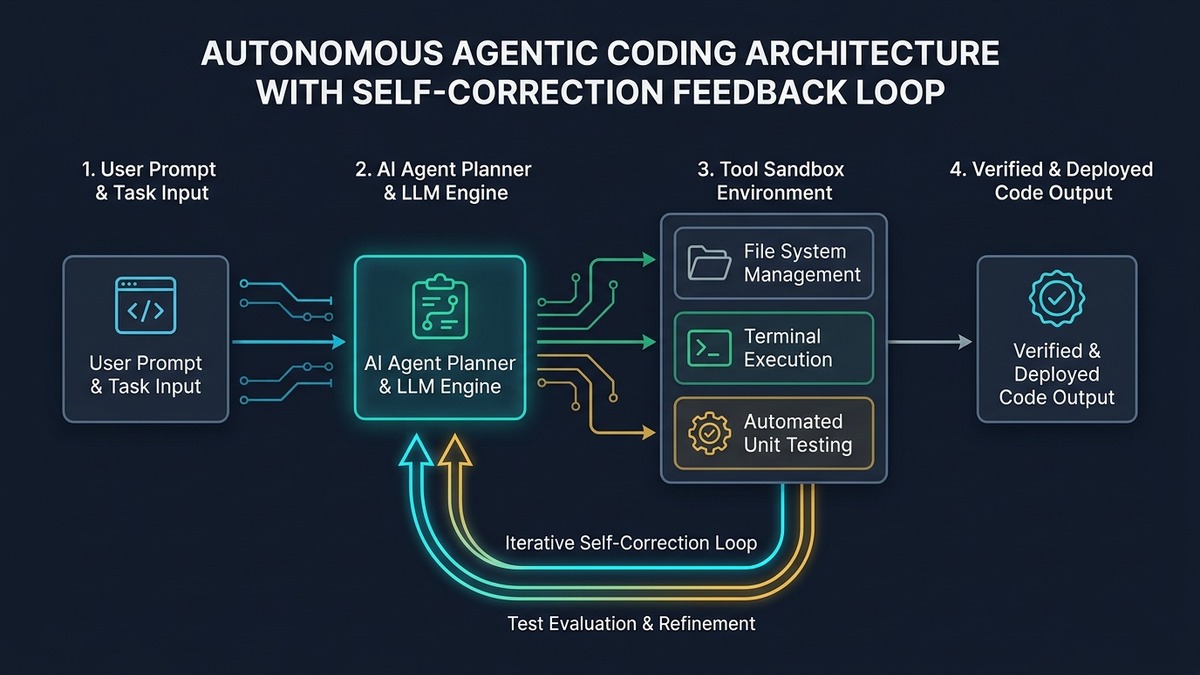
AI coding agents such as Codex read your codebase, edit multiple files, and run commands and tests while they work through larger tasks with you. In Codex, an AGENTS.md file holds persistent instructions for a project, and config.toml holds the agent’s configuration.
We just published a course on the freeCodeCamp.org YouTube channel that will teach you how to get reliable results from a coding agent by giving it the right context, planning the work, controlling its permissions, and verifying every change. This course is taught by Tom Chant, Head of Education at Scrimba.
You’ll work through realistic tasks, including challenges on skills, characterization tests, and config.toml. The course is aimed at experienced developers adding AI to their workflow and at non-coders who want to build software with AI help. You can also study it interactively on Scrimba.
In this course, you will learn:
Prompting & Project SetupHow to write effective prompts and comment prompts for a coding agent,
2. Deep Dive: Architecture & Implementation Patterns
When building enterprise-grade applications, the fundamental architecture determines long-term maintainability. Key principles to consider include:
- Separation of Concerns: Isolating business logic from presentation and infrastructure layers ensures modularity.
- Scalability & Concurrency: Optimizing throughput with asynchronous operations, caching layers, and decoupled services.
- Security by Design: Enforcing strict input validation, token-based authentication, and least-privilege access control across all endpoints.
Example Implementation & Code Structure
Here is an illustrative implementation showcasing standard patterns used in production environments:
# Generative AI Pipeline & Prompt Orchestration
import google.generativeai as genai

def generate_smart_insight(prompt: str) -> str:
    model = genai.GenerativeModel('gemini-1.5-flash')
    response = model.generate_content(prompt)
    return response.text.strip()
3. Career Roadmap: Why This Skill Matters in 2026
According to global tech hiring benchmarks, proficiency in Generative AI & Agentic Workflows directly correlates with accelerated career growth and high-tier compensation packages. Software engineers who pair theoretical foundations with hands-on project mastery stand out during technical interviews.
Want to master Generative AI, Agentic Workflows & Data Science with Real-World Projects?
Learn LLM fine-tuning, RAG architectures, LangChain, and advanced data engineering with hands-on labs. Join mentor-led live classes with guaranteed placement assistance in Madhapur, Hyderabad.
At Asian Technology Hub, students practice these exact enterprise architectures with 1-on-1 mentor guidance, live project deployments, and structured interview preparation.
4. Frequently Asked Questions (FAQ)
What is the primary advantage of understanding Learn Agentic Coding with Codex & AI Coding Agents?
It provides engineers with the foundational and practical techniques needed to architect reliable, scalable systems while aligning with modern industry standards.
How can beginners start practicing Generative AI & Agentic Workflows?
Begin by building end-to-end sandbox projects, studying production repositories, and following structured training tracks like Asian Technology Hub's mentor-led programs.
Is Generative AI & Agentic Workflows in high demand for tech job placements?
Yes, tech companies actively prioritize candidates with verified practical project experience in full-stack, cloud, and modern programming frameworks.
5. Recommended Learning Tracks & Related Tech Guides
To build job-ready capstone projects and prepare for top-tier technical interviews, explore these related guides:
- Python Full Stack & Backend Architecture Guide — Master FastAPI, Django, PostgreSQL, and scalable microservices.
- Generative AI & LLM Systems Roadmap — Implement LangChain, RAG architecture, and vector embeddings.
- AWS Cloud Infrastructure & Kubernetes DevOps — Deploy production CI/CD pipelines and container clusters.
- Tech Career Transition & 1-on-1 Mentorship Roadmap — Fast-track your engineering career with Asian Technology Hub.
Ready to Transition into a High-Paying Software Career?
Whether you are a student, fresh graduate, or working professional switching into IT, Asian Technology Hub provides industry-standard curriculum, real enterprise capstone projects, and direct placement support.